

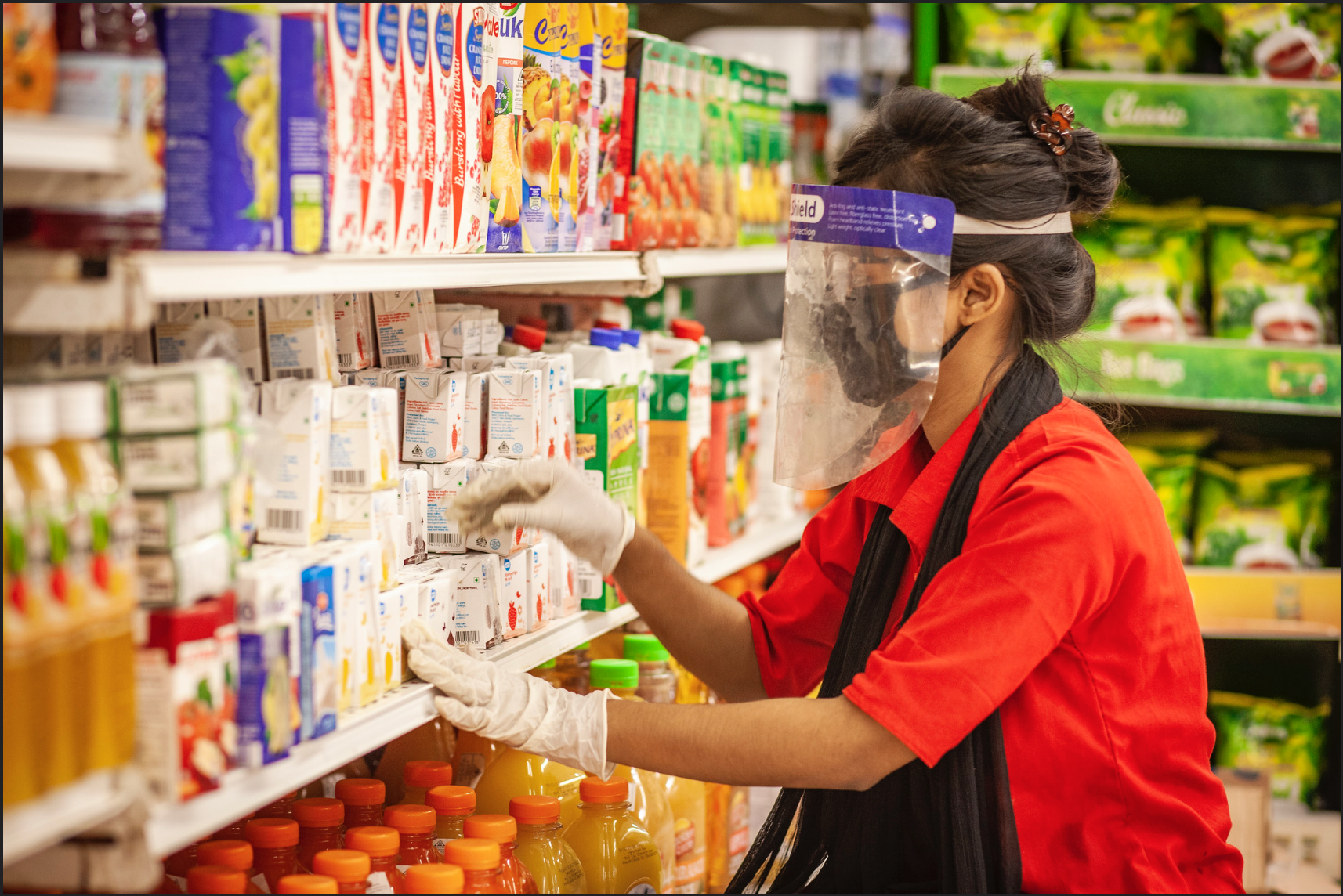
Face coverings are now required by regulations which apply to employees in certain sectors including hospitality, retail and tourism. Employers, although employers can ask employees to supply their own face coverings. In light of their health and safety duties employers in these sectors should supply these face coverings for staff to minimise the risk of fines and claims if the employees do not wear them.
Employers need to consider the standard and type of mask and how many will be issued to staff per day. Where face masks are imposed as a matter of law or as a result of the employer’s risk assessment employers should ensure that face coverings are worn appropriately. Disputes may arise between employees with differences of opinion about correct wearing of face coverings and employers will need a mechanism for this to be raised and investigated with follow up disciplinary action where necessary.
What is classed as a face covering?
Anything that safely covers the nose and mouth will suffice including reusable or single-use face masks, scarves etc.
Sectors where face coverings are required
From 24 September face coverings must be worn by retail, leisure and hospitality staff working in public areas where they’re likely to come into contact with a member of the public. This includes:
- shops
- supermarkets
- bars
- pubs
- restaurants
- cafes
- banks
- estate agents
- post offices
- public areas of hotels and hostels.
Guidance stating that face coverings and visors should be worn in close contact services such as hairdressing became law from 24 September. Customers in private hire vehicles and taxis must wear face coverings from 23 September onwards.
Where there is a screen or other physical barrier between staff and members of the public then staff behind the barrier need not wear a face covering but staff working on public transport and taxi drivers will continue to be advised to wear face coverings. Transport workers do not have to wear face coverings as a matter of law but should do so if they are unable to maintain social distancing in passenger facing roles.
Exceptions
A minority of employees may have legitimate reasons for not wearing face coverings, such as because of a physical or mental illness. For example, it could be indirect disability discrimination to insist an employee with claustrophobia or asthma wears a face covering if they are unable to do so because it would prevent them breathing properly. Employers must make reasonable adjustments for disabled workers which may entail not wearing a face covering.
The risk assessment process should pick up any individual issues so, for example, as well as the general risk assessment process an individual risk assessment may be needed for an employee with COPD and breathing issues. There may be reasonable adjustments needed to provide alternative protections instead of a face covering such as a separate working area or work which could be undertaken remotely.
Face coverings are only one part of coronavirus preventative measures including social distancing, hand hygiene, surface cleaning, PPE and screens to separate people from each other. The government has provided detailed guidance for specific workplace settings.
Employees who are exempt from wearing a face covering may be abused by other employees. The employer will need to protect those employees from confrontation or harassment, wearing exemption badges is one option.
Penalties
Employers must take reasonable steps to comply with the law. The police and Transport for London can issue fines of £200 (reduced to £100 if paid within 14 days) for the first offence unless there is an exemption. A second fine doubles to £400 and a third fine to £800, up to a maximum value of £6,400.
Use by the public
Face coverings are also mandatory for passengers on public transport in England, Scotland, Wales and Northern Ireland. Visitors to banks, shops, supermarkets and shopping centres in England, Scotland and Northern Ireland also have to wear face coverings. Face coverings do not have to be worn by the public where it would be ”impractical” to do so (e.g. customers in restaurants must wear face coverings, except when seated at a table to eat or drink.)
CIPD 2020


